One of the biggest misconceptions in haircare is that frizz is something you're simply born with.
While certain hair types may be more prone to frizz than others, frizz itself is actually a symptom, a sign that something is disrupting the smooth alignment of your hair strands.
That's why straight hair can become frizzy. Curly hair can become frizzy. Even hair that normally looks smooth and glossy can suddenly puff up, fuzz out or lose definition under the right conditions.
So what is frizzy hair exactly? To find out, we turned to Color Wow Chief Chemist, Dr. Joe Cincotta, whose decades of research have focused on understanding, and solving, the science of frizz.
What Is Frizzy Hair?
Dr. Joe defines frizz as:"When a percentage of someone's hair strands do not fall in cohesive alignment, but instead go in all different directions."
In simple terms, frizz happens when hair strands stop behaving as a smooth, unified group.
Instead of lying neatly together and reflecting light evenly, individual hairs separate from the rest of the style. The result can range from a halo of flyaways around the crown to widespread puffiness and expansion throughout the lengths.
What makes frizz so frustrating is that it doesn't always look the same from person to person.
For some people, frizz means fluffy, undefined curls. For others, it shows up as rough-looking straight hair, fuzzy ends, or a blowout that loses its sleek finish the moment they step outside.
The common thread is misalignment. When strands stop moving together, frizz appears.
What Does Frizzy Hair Look Like?
Many people aren't sure whether they actually have frizzy hair or whether they're dealing with something else.
Frizz typically shows up as one or more of the following:
Hair that appears puffy or expanded
A halo of flyaways around the head
Loss of shine or reflectivity
Styles that don't hold their shape
Rough-looking or fuzzy texture
Curls that lack definition
Hair that gets bigger throughout the day
Blowouts that revert back to their natural state
One of the easiest ways to identify frizz is to ask yourself:
Does my hair look smoother at some points during the day than others?
If the answer is yes, frizz is often the culprit.
The Two Main Types of Frizz
One of the biggest reasons people struggle to get rid of frizz is because they're treating every kind of frizz as if it's the same problem.
At Color Wow, we see two primary categories of frizz:
Type 1: Structural Frizz
Structural frizz originates from the condition of the hair itself.
Hair that has been damaged, chemically processed, over-styled or weakened often develops a rough, uneven surface. The cuticle becomes chipped, lifted and irregular, making it difficult for strands to align smoothly.
You may notice that even on a dry, non-humid day, your hair still appears fuzzy or expanded.
That's because the issue is built into the condition of the hair strand itself.
Type 2: Environmental Frizz
Environmental frizz is different. Hair may look perfectly smooth indoors, only to puff up the moment it encounters humidity.
This happens because moisture from the air enters the hair through raised cuticles. As hair absorbs that moisture, strands swell unevenly, disrupting alignment and causing frizz.
If you've ever spent 45 minutes blow drying your hair only to have it frizz up during your walk from the car to the office, you've experienced environmental frizz.
The key distinction is this:
Structural frizz starts within the hair.
Environmental frizz starts outside the hair.
And each requires a different solution.
How to Treat Structural Frizz
If your hair feels rough, damaged, chronically puffy or porous, your first priority should be improving the condition of the hair surface itself.
Unlike traditional masks that simply coat the hair, Dreaming is an Advanced Repair & Resurfacing Treatment designed specifically for puff-prone, frizz-prone hair.
For decades, anti-frizz products relied on oils, waxes, and heavy silicones to try to suppress frizz. The downside was that they often left hair greasy, weighed down, or coated.
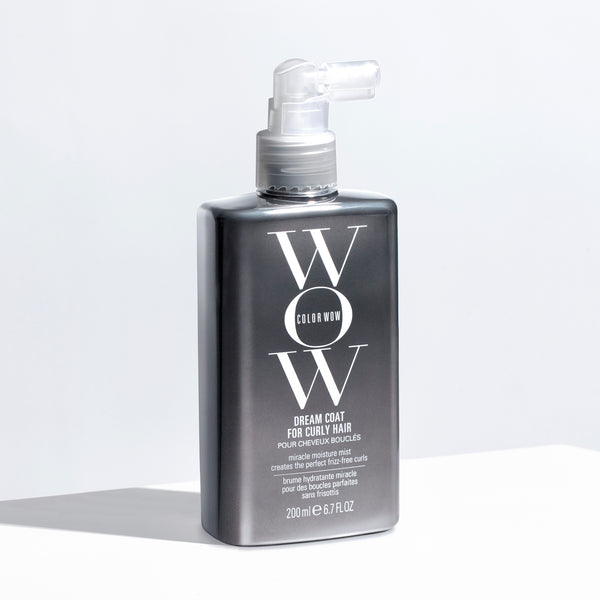
Dream Coat takes a different approach. Activated by heat and tension during blow drying, Dream Coat creates an ultra-lightweight, invisible humidity-resistant shield around each strand. Instead of weighing hair down, it helps prevent moisture from penetrating the hair and disrupting your style.