TL;DR: Giving your hair a break after summer means reducing the stressors that can leave it dry, rough, tangled, or harder to style, including UV exposure, swimming, mineral buildup, frequent heat styling, and friction.
Wearing your natural curls can reduce reliance on hot tools, but it still requires gentle cleansing, conditioning, detangling, and nighttime protection. Focus on lower-tension styles, less rough handling, and a routine that helps your texture look defined rather than depleted.
After a summer of sunshine, swimming, travel, sweaty days, and last-minute heat styling, hair can start to behave differently.
It may feel rougher through the ends, puffier around the crown, duller in color, or harder to detangle. Curls that once dried into smooth, springy sections may suddenly look fluffy, stretched, or uneven.
That does not mean you need to stop styling your hair entirely. A hair break is about giving your strands less to recover from.
For a few weeks, reduce the things that tend to stack up on hair: high heat, tight styles, rough towel drying, repeated brushing, and buildup from water, pool days, or product layering.
For curly hair, this can be the perfect time to lean into the texture you already have.
What Does It Mean to Give Your Hair a Break?
A hair break is not a promise to do nothing with your hair. It is a more intentional routine that limits unnecessary stress while helping hair feel softer, look smoother, and become easier to manage.
Hair fiber is made primarily of keratin. The portion that has grown out from the scalp is not living tissue, so it cannot repair itself in the same way as skin.
Still, you can improve the look and handling of weathered hair by limiting further damage and using products that condition, lubricate, and smooth the fiber.
A post-summer reset may look like:
-
Wearing your natural curls or waves more often
-
Taking a pause from frequent flat ironing or curling
-
Reducing repeated high-heat blowouts
-
Detangling slowly with conditioner for slip
-
Wearing looser styles and varying where you place ponytails and buns
-
Addressing mineral, chlorine, or product buildup when hair feels coated or dull
-
Protecting your curls from overnight friction
Why Hair Can Feel Stressed After Summer
Several summer habits can overlap, which is why hair often feels different by the end of the season.
Sun exposure can leave hair looking dry or faded

Extended UV exposure can affect the proteins and pigments within the hair fiber.
In real life, that may show up as less shine, a rougher feel, or color that looks warmer, lighter, or less even than it did at the start of summer.
The visible effect varies with natural hair color, color treatments, prior lightening, texture, and how much time you spend outdoors.
A hat provides a straightforward physical barrier when you know you will be in direct sun for extended periods.
Pool water, seawater, and hard water can leave deposits behind

Pool water, saltwater, and mineral-rich water do not affect every head of hair in the same way.
But after a summer of swimming or travel, some people notice that hair feels stiff, looks dull, tangles more easily, or no longer reflects light as evenly.
Minerals and metals in water can deposit on the hair surface. Chlorine exposure may also contribute to a coated or rough feeling, especially when it combines with dry, porous, color-treated hair.
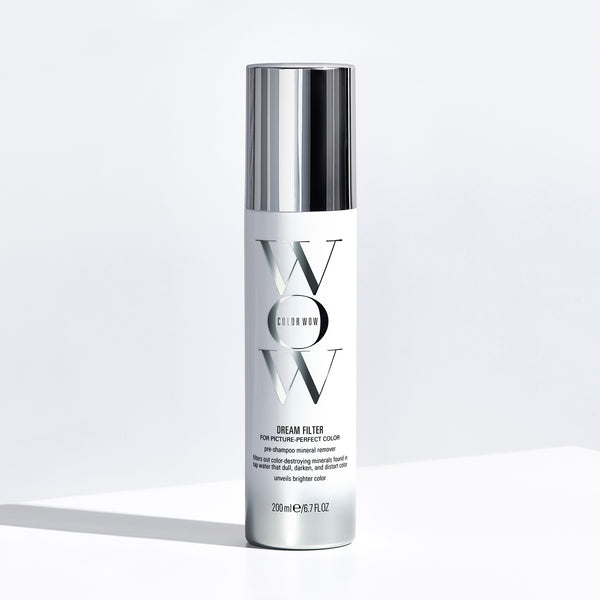
If your strands look duller, darker, or less vibrant than usual after pool days or hard-water exposure, use a targeted pre-shampoo treatment rather than aggressively scrubbing or piling on heavier conditioning products.

Dream Filter for Picture-Perfect Color is designed to remove mineral and metal buildup from tap water, well water, and pool water, including chlorine deposits that can affect hair’s feel and appearance.
Heat styling can compound existing dryness

Hot tools do not automatically ruin hair. The temperature, number of passes, frequency of use, and hair’s existing condition all matter. But if your hair has already dealt with sun, swimming, and frequent washing, a break from daily high-heat styling can be a sensible reset.
When you do blow-dry, diffuse, curl, or straighten, use heat protection and avoid repeatedly going over the same section. Controlled technique usually matters more than simply owning another tool.
Wearing Your Natural Curls Can Give Hot Tools a Break

Choosing to wear your curls naturally after summer can reduce how often you blow-dry, flat iron, or re-curl your hair.
That can make a meaningful difference for anyone who has relied on heat styling to manage frizz or create a uniform shape. But wearing curls naturally does not mean leaving them to chance.
Curls and coils have bends along the hair fiber that can make them more vulnerable to tangling and can slow the movement of natural scalp oils down the lengths. The result: roots may feel fine while mid-lengths and ends feel dry.
The answer is not necessarily more product. It is using the right level of moisture, slip, and hold for your texture.
1. Cleanse according to your scalp, not a fixed calendar
There is no universal wash schedule for curly hair. Your ideal frequency depends on scalp oil, workout habits, product buildup, hair density, curl pattern, and personal preference.

When you shampoo, focus your attention on the scalp. Let the lather rinse through the lengths instead of rubbing the hair into a tangled mass. Follow with conditioner through the mid-lengths and ends, where hair often needs the most help with softness and detangling.
For a more texture-specific wash-day approach, see how to wash curly hair.
2. Detangle with slip and patience
Start at the ends, then work upward in small sections. Trying to pull through a knot from the roots downward can tighten it and put more force on the hair. Use your fingers first where possible.

If you use a comb or brush, choose one that glides through the hair and work only when you have enough conditioner or detangling product for slip.
Wet hair can stretch more easily, so rough detangling is one of the quickest ways to create avoidable breakage.
3. Style curls while they are still wet enough to form clumps
Curls tend to look more defined when you style them while they are still wet enough to gather into their natural sections.
Apply your chosen styling product evenly, then smooth, rake, scrunch, or finger-coil based on the finish you want.

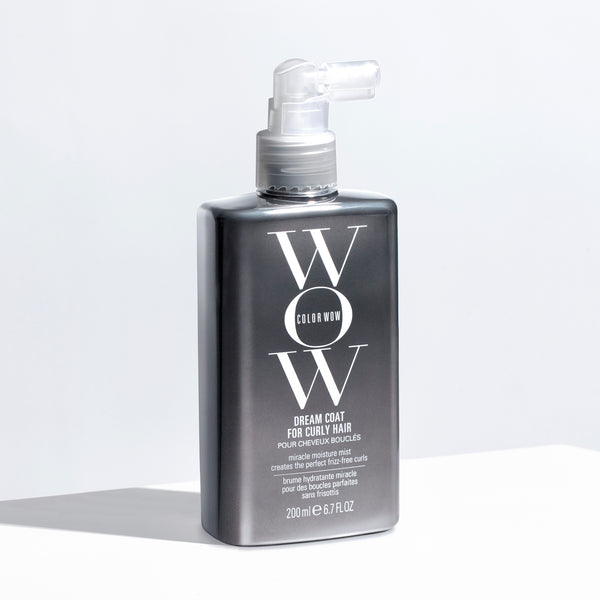
For a lower-effort curl day, Dream Coat for Curly Hair can help enhance natural curl texture while controlling frizz and humidity.
The alcohol-free mist is designed to deliver soft, defined curls without the heavy, coated feel that some curl styling routines create.
Apply it section by section to clean, damp hair, including the underlayers, then air-dry or diffuse.
Once your curls start drying, resist the urge to keep touching them. Constantly separating and reworking curl clumps can create the fluffy halo you were trying to avoid.
Give Your Hair a Break From Friction, Too
Heat is only one source of stress. Friction can quietly undermine your hair’s condition and your style, especially if you wear curls.
Towel rubbing, tight elastics, aggressive brushing, rough bedding, and pulling hair into the same bun every day can all make hair look more frizzy or cause fragile areas to snap.
1. Blot instead of rubbing with a towel

Do not rub your hair back and forth with a towel after washing. Gently squeeze or blot away excess water instead.
This small shift helps preserve curl groupings and reduces the rough treatment that can make hair expand into frizz before it has even dried.
A soft cotton T-shirt or a gentle microfiber towel can be easier on curls than vigorous towel drying.
2. Rotate tight styles

A sleek ponytail or bun can be useful on busy days, but avoid making it your default style in the exact same spot every day.
Repeating tension at the crown, hairline, or nape can make those areas feel tender and may contribute to breakage over time.
Change your part, ponytail position, or bun placement. Choose a softer scrunchie instead of a tight elastic when possible. If your hairline feels sore after styling, that is a sign to loosen up.
3. Support rough, fragile post-summer lengths
If your hair feels dry, puffy, or less elastic after summer, it may benefit from a treatment that goes beyond surface shine.

Dreaming Advanced Repair + Resurfacing Treatment is designed to moisturize, smooth, and improve the look of weathered hair without a heavy finish.
In clinical testing, it delivered 83% less breakage and 28% greater elasticity after one use.
Apply it after shampooing, distribute it from the upper lengths through the ends, leave it on for two to three minutes, then rinse thoroughly. Use it when your hair needs a more intensive reset, following the product directions for your routine.
How to Sleep with Curly Hair without Flattening It
Nighttime can undo a great curl day. You may go to sleep with bouncy, defined texture and wake up with flattened roots, stretched-out lengths, fuzzy sections around the crown, and tangles at the nape.
You cannot eliminate every effect of moving in your sleep. You can, however, reduce friction and keep your curls from getting crushed beneath your head and shoulders.
1. Try a loose pineapple for longer curls

A pineapple is a loose ponytail placed high on the head, usually near the crown. It keeps more of your curl length away from your pillow and helps preserve volume at the roots.
Use a soft, snag-resistant scrunchie and keep the ponytail loose.
You are not trying to stretch your curls into a tight topknot. You are simply gathering them gently out of the way.
2. Choose a smoother sleep surface

Silk and satin are popular options for pillowcases, scarves, and bonnets because smoother fabrics may create less friction than rougher bedding materials.
Less rubbing can mean fewer tangles and less disruption to curl clumps overnight.
The terms are not interchangeable. Silk is a natural fiber, while satin refers to a weave and may be made with silk or synthetic fibers.
Product quality and texture can vary widely, so focus on what feels smooth, stays comfortable overnight, and works with your routine.
Direct clinical research comparing pillowcase materials for curl retention remains limited. Still, reducing friction is a practical approach if you regularly wake up with frizz, knots, or flattened curls.
3. Refresh only what needs attention

Do not assume you need to fully re-wet your hair every morning.
Often, you can refresh a few flattened pieces, add a little water where needed, and gently reshape the curl pattern with your fingers.
For more nighttime techniques by curl length and texture, read how to sleep with curly hair.
A Realistic Post-Summer Hair-Break Routine
A break from high-maintenance styling does not need to become an entirely new lifestyle.
Start with a few changes that reduce the stress your hair experiences most often.
-
1
Remove pool-water, mineral, or product buildup when your hair feels coated, dull, or unusually rough.
-
2
Cleanse your scalp thoroughly, then condition the lengths for softness and detangling slip.
-
3
Blot excess water rather than rubbing hair with a towel.
-
4
Style curls while they are wet enough to form smooth, defined groupings.
-
5
Air-dry when it suits your schedule, or diffuse with heat protection and controlled heat.
-
6
Avoid tight, repeated styles that pull on the same areas.
-
7
Put curls up loosely and reduce overnight friction.
-
8
Trim visibly frayed or split ends when needed, since split ends do not permanently fuse back together.
Give Your Hair Less to Recover From
Post-summer hair does not need an extreme routine. It needs less friction, less unnecessary heat, and more thoughtful handling from wash day through bedtime.
Wearing your natural curls can be a satisfying part of the reset, especially when you give them the support to stay defined, soft, and easy to refresh. Let your texture do more of the work, then save the high-heat styling for the days you genuinely want it.
Read More