Q&A: How to Use Color Wow Dream Coat like a Pro
Jump to:
Since Dream Coat Supernatural Spray launched, our inboxes, DMs, and phone lines have never quite recovered. The before-and-afters keep coming, and so do the questions.

Dream Coat isn't a product you just spray and hope for the best, it has a specific mechanism, a specific application method, and a specific reason why it works when other anti-frizz products don't.
Dream Coat is the difference between good results and genuinely transformative ones.
Here is every question we get asked, answered properly, with the science behind each one.
How Do I Use Dream Coat?

Dream Coat is a heat-activated leave-in treatment, not a styling spray. The distinction matters because it changes how you apply it, when you apply it, and what you do after.
The full application method:
-
1
Shampoo and condition as usual, ideally with Color Security Shampoo and conditioner (more on why below)
-
2
Towel-blot hair with a microfiber towel until damp. Not soaking wet, not dry; the texture should feel like it's been out of the shower for a few minutes
-
3
Divide into sections. 4 sections for fine/medium hair, up to 6 sections for thick or long hair. Sections ensure every strand gets thorough, even coverage
-
4
Spray Dream Coat evenly and liberally through each section, working product from roots to ends, on top and underneath. Don't be shy, coverage matters more than using less product
-
5
Blow-dry each section with a brush, creating tension as you dry. A round brush or paddle brush both work. The key is tension and complete drying
-
6
Dry each section completely before moving to the next. Partially dried sections that then get exposed to air lose some of the sealing effect
-
7
Optional: Follow with a flat iron for an enhanced glass-smooth finish once hair is fully blow-dried
That's the full protocol. Results build with each correct application and last through 3–4 shampoos.
Why Does Dream Coat Need Heat to Work?

Dream Coat uses hydrolyzing technology, a process where the formula's active ingredients interact with the keratin proteins in the hair shaft under heat.
The blow-dryer isn't just drying the product, it's activating a chemical bonding process between the formula and the hair surface.
Here's what happens at a molecular level:
-
1
Applied to damp hair, Dream Coat's active ingredients are distributed across the cuticle
-
2
As heat is applied, ingredients bond to the cuticle's keratin structure and compress the cuticle scales toward their flattest possible position
-
3
As the hair cools in its dried state, this flattened, bonded cuticle becomes the new surface, sealed against atmospheric moisture
Without heat, Dream Coat dries as a surface coating, still providing some smoothness and gloss, but without the humidity resistance.
In moderate conditions, you'd see some benefit. In high humidity, you'd see the difference immediately.
The blow-dryer is part of the formula, not just part of the routine. Skipping it means skipping the most important step.
Can I Air-Dry After Applying Dream Coat, Then Use a Flat Iron?
No, and this is one of the most common reasons people don't get the results they expected.
If Dream Coat is applied and then air-dried, the heat-activation step has been skipped.
A flat iron cannot replicate what the blow-dryer does, because the chemistry requires heat to be present while the cuticle is transitioning from damp to dry.

The correct sequence when using a flat iron:
-
1
Apply Dream Coat to damp hair
-
2
Blow-dry completely with a brush (this activates the treatment)
-
3
Then use a flat iron for additional smoothness and gloss
Flat ironing post blow-dry does enhance results. Higher surface temperature creates even more cuticle compression and produces a glass-hair finish.
But it works in addition to the blow-dryer, not instead of it.
What Hair Type is Dream Coat For?

Dream Coat is formulated for all hair types, but it was specifically designed for hair that struggles with frizz, humidity reactivity, and difficulty holding a style.
That includes:
-
Frizzy hair of any texture, the primary use case
-
Dry hair that loses moisture quickly and reacts to atmospheric moisture
-
Wavy hair that wants to achieve sleek, smooth, gloss styles
-
Color-treated hair — chemical processing raises the cuticle and increases porosity, making treated hair significantly more vulnerable to humidity frizz
-
Fine hair — Dream Coat's weightless formula doesn't build up or flatten hair

See which of the 3 Dream Coats is right for you:
1. Dream Coat Supernatural Spray
Straight, wavy, and lightly textured hair — all porosity levels
Coarse, thick, very resistant, or highly porous hair — for anyone who felt the original wasn't quite enough
Curl types 2 and 3 — same cuticle-sealing technology, formulated to enhance rather than flatten curl pattern
Does the Shampoo I Use Affect Dream Coat Results?

Yes, significantly. This is the step most people underestimate, and it's one of the most common reasons Dream Coat underperforms.
Most shampoos contain silicones, conditioning agents, thickening agents, and oils that are designed to deposit on the hair shaft and not fully rinse away. They leave a coating that makes hair feel smoother immediately after washing, but that coating is also a barrier.
When Dream Coat is applied over a hair shaft that already has a residue layer on it, the formula cannot fully reach the underlying cuticle. The result? Reduced gloss, reduced humidity resistance, and results that don't last.
Color Security Shampoo is specifically engineered around this problem. It contains no silicones, conditioning agents, or thickening agents.
The result? A hair shaft that is residue-free and fully receptive to Dream Coat.
Think of it this way: Dream Coat needs a clean canvas to bond to. Color Security Shampoo creates that canvas.

Can I Use Other Products With Dream Coat?
During application (on damp hair, pre-blow-dry): use only Dream Coat. Other products applied at this stage, particularly those containing oils, silicones, or heavy conditioning agents, can interfere with Dream Coat's ability to bond with the cuticle and reduce results.
The Dream Cocktails and Money Mist are the approved exceptions.

These leave-in treatments are formulated to work compatibly with Dream Coat, layering beneath it without compromising the cuticle-sealing process:
-
Coconut Cocktail — restores hydration and silky suppleness; ideal for dry or damaged hair
-
Kale Cocktail — adds strength and body; ideal for fine or limp hair
-
Carb Cocktail — volumising treatment for fine or thin hair wanting more body alongside frizz control

Can I Use Dream Coat on Dry Hair?
No, Dream Coat must be applied to damp or towel-blotted hair. There are two reasons:
Distribution: On dry hair, Dream Coat cannot be distributed evenly through the hair shaft. It sits on the outermost surface layer rather than penetrating and coating the cuticle thoroughly.
Activation: The heat-activation chemistry requires moisture to be present in the hair. The combination of residual water in damp hair + heat from the blow-dryer is what triggers the cuticle bonding process. On dry hair, there is no moisture to participate in the reaction.
The correct moisture level: towel-blotted, microfiber-dried damp hair. If your hair is dripping wet, blot further. If it's already partially air-dried, mist lightly with water before application.
Can I Use Dream Coat on Color-Treated Hair?

Yes, and in fact, color-treated hair is one of the primary uses Dream Coat was designed for.
Chemical color services work by lifting the hair cuticle to deposit dye. Once lifted, the cuticle never fully returns to its original compact state.
Repeated services cause this elevation over time, progressively increasing porosity and frizz. This is why hair that was easy to manage before regular coloring becomes increasingly difficult to control afterwards.
Dream Coat is completely safe for:
-
Color-treated hair (permanent, semi-permanent, glosses)
-
Keratin-treated hair
-
Brazilian blowout-treated hair
-
Highlighted and bleached hair
Dream Coat is also safe to use before a color appointment, though we recommend shampooing at least once before color application to ensure the scalp and strand are in their cleanest state for dye adhesion.
An additional benefit for color-treated hair:
The sealed cuticle that Dream Coat creates also locks color molecules more effectively beneath the cuticle surface — which means Dream Coat contributes to color longevity, not just frizz control.
Can I Color My Hair With Dream Coat Already On It?

Yes, it is safe to color your hair after using Dream Coat. The formula is not a barrier to color chemistry in the way that some heavy wax or oil-based products can be.
That said: we recommend shampooing at least once before color application. This ensures your hair is in its cleanest state before dye is applied, which supports even color uptake and optimal results.
Does Dream Coat Work for Fine or Thin Hair?
Yes. Dream Coat's formula is weightless — it does not build up on the hair shaft or create the heaviness that causes fine hair to fall flat.
This is by design: the formula seals the cuticle rather than coating it with thick emollients, which means there is no accumulated weight.
That said, for fine hair we recommend:
-
Using slightly less product per section than you would for thick hair
-
Focusing application on mid-lengths and ends rather than saturating the roots
-
Ensuring you're using Color Security Shampoo — residue from other shampoos compounds on fine hair and can create the heaviness that Dream Coat alone won't

For fine hair that wants volume alongside frizz control:
Apply Dream Cocktail Carb-Infused before Dream Coat.
This volumising treatment adds body and thickness without weighing hair down, and works compatibly with Dream Coat's chemistry.
Can I Curl or Wave My Hair After Using Dream Coat?
Absolutely, and this is an underutilised use case that more people should know about.
Dream Coat's primary association is with sleek, straight, smooth results. But what it actually creates is a frizz-free, humidity-resistant base. And that base is the ideal foundation for curls and waves too.
The common frustration with styled curls: they look beautiful when you finish, and then humidity swells the hair and the curl definition collapses into frizz within hours.
Dream Coat's sealed cuticle prevents that moisture entry, so curls retain their definition and gloss significantly longer.
For styled curls or waves using Dream Coat:
-
1
Apply Dream Coat to damp hair
-
2
Blow-dry straight or with minimal tension to activate the treatment
-
3
Once completely dry, use your curling iron or waver as usual
-
4
Finish with Pop & Lock High Gloss Finish for enhanced definition and shine

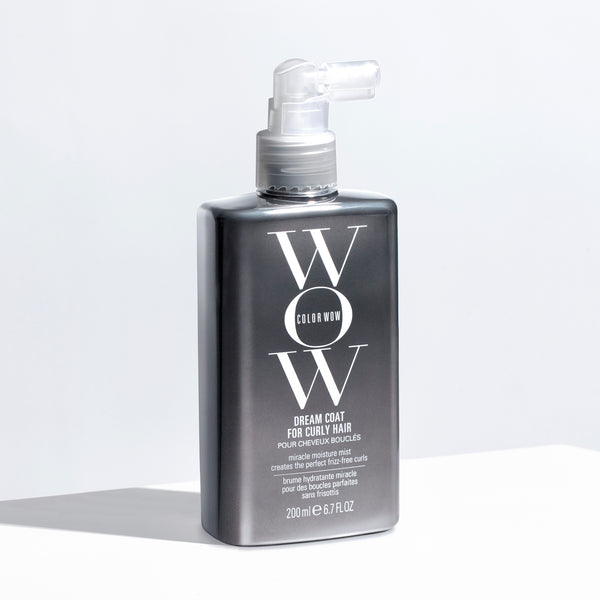
For natural curls: Use Dream Coat for Curly Hair.
Apply to soaking wet hair, rake through with fingers, and diffuse.
This version enhances and defines the natural curl pattern while providing the same cuticle-sealing humidity protection.
Is Dream Coat Safe for Hair Extensions?
Yes, and we'd actively recommend using it on extensions if you're using it on your natural hair.
Extensions are more susceptible to frizz and dryness than natural hair, as they receive no sebum from the scalp.
Dream Coat's smoothing technology improves extension texture, shine, and humidity resistance. And, treating both your natural hair and extensions ensures a cohesive, seamless finish rather than two noticeably different textures.
How Long Do Dream Coat Results Last?
3–4 shampoos under normal conditions. Which for most people translates to approximately one week of frizz protection from a single application.
Several factors affect longevity:
-
The shampoo you use: Shampoos with heavy sulfates strip Dream Coat's bond from the cuticle faster than a gentle, sulfate-free formula. Using Color Security Shampoo extends results significantly.
-
How thoroughly you applied it: Uneven or partial application means uneven protection. Sections that were under-covered lose their frizz resistance first. Thorough, liberal application in proper sections is the foundation of lasting results.
-
Environmental exposure: Very high humidity, salt water, or pool water all challenge the barrier. Protection holds, but in extreme conditions, results may fade slightly faster.
Tip for extending results: On Day 2 or 3, if the surface has been slightly disrupted, a light mist of Dream Coat followed by a quick pass with a blow-dryer can refresh the protection without a full wash.
Why Isn't Dream Coat Working for Me?

If you've used Dream Coat and felt the results were disappointing, the issue is almost always one of five things:
-
1
Applied to dry hair — Dream Coat must go on damp hair to activate properly. On dry hair, it can't distribute or bond correctly.
-
2
Not using heat — Air-drying after application skips the activation step. The blow-dryer is essential, not optional.
-
3
Product buildup on the hair — Residue from silicone-containing shampoos or accumulated hard water minerals prevents Dream Coat from bonding with the cuticle beneath. A Dream Filter reset before your next wash will make an immediately noticeable difference.
-
4
Other products applied at the same time — Products containing oils, heavy conditioners, or silicones applied alongside Dream Coat during the damp-hair step interfere with the formula. Dream Cocktails and Money Mist are the only compatible exceptions.
-
5
Does Dream Coat Protect Against Heat Damage?
Yes, Dream Coat is a heat protectant. The sealed cuticle it creates acts as a thermal barrier, reducing the direct exposure of the hair's internal structure to blow-dryer and styling tool heat.
This is one of the reasons Dream Coat works better than applying a separate heat protectant and then Dream Coat separately: the products are doing overlapping work, and the combined chemistry can interfere.
Dream Coat handles both frizz protection and heat protection in a single step.
For very high heat styling (flat irons above 200°C / 390°F), we recommend keeping tools moving and avoiding prolonged contact with any single section.
Can I Use Dream Coat Every Wash?
Yes, Dream Coat is designed for regular, repeated use. It does not build up on the hair shaft over time, unlike silicone-based products that can accumulate and create heaviness or dullness.
That said, because Dream Coat's protection lasts through 3–4 shampoos, you don't need to reapply every wash. Applying every 3–4 washes, when you feel the frizz resistance beginning to reduce, is most effective.
The one maintenance step to incorporate regularly: Dream Filter once a month. Hard water minerals accumulate on the hair shaft with every wash and can gradually reduce Dream Coat's ability to bond fully with the cuticle beneath.
A monthly Dream Filter reset ensures you're always applying to a clean, receptive surface.
What's the Difference Between Dream Coat, Extra Strength Dream Coat, and Dream Coat for Curly Hair?
All three use the same core hydrolyzing cuticle-sealing technology. The difference is in concentration, formula weight, and finishing result:


Not sure which Dream Coat is right for you?
Take our 60-second Hair Quiz and discover the best Dream Coat formula for your hair type.
Take the Hair Quiz →The Complete Dream Coat Routine: Products That Work With It
-
1
Before Washing (Monthly)
Dream Filter Pre-Shampoo Mineral Remover removes hard water minerals that block Dream Coat bonding. Non-negotiable if you live in a hard water area.
-
2
Cleansing
Color Security Shampoo for 100% residue-free. The cleanest possible canvas for Dream Coat.
-
3
Leave-In (Optional, Before Dream Coat)
Coconut Cocktail / Kale Cocktail / Carb Cocktail applied before Dream Coat, won't interfere with sealing.
-
4
The Treatment
Dream Coat Supernatural Spray applied to damp hair, activated with blow-dryer.
-
5
Finishing (On Dry Hair, After Blow-Dry)
Pop & Lock High Gloss Finish for a secondary surface seal and glass-hair gloss.
-
6
Quick Fix (Between Washes)
One-Minute Transformation for an on-the-spot frizz correction for dry hair between wash days.
Frequently Asked Questions: Quick Answers

Do I need to section my hair when applying Dream Coat?
Yes, sections ensure complete, even coverage. Uneven application means uneven frizz protection. Any area that doesn't receive thorough coverage will frizz while covered sections don't.
Can I use Dream Coat on non-colored hair?
Absolutely. Dream Coat is not a color-specific product. It's for anyone who wants humidity-proof, frizz-free, glassy hair — regardless of whether that hair has been colored.
What happens if I get caught in rain after using Dream Coat?
Dream Coat's sealed cuticle is significantly more resistant to rain. The hydrolyzing bond isn't easily disrupted by surface water exposure. Your style will hold far better than without treatment.
Extended heavy rain may eventually challenge any anti-humidity product, but brief exposure in normal rain is well within Dream Coat's performance range.
Can I use Dream Coat if I have a sensitive scalp?
Dream Coat is applied to the hair shaft, not the scalp directly. Apply from mid-lengths, and where possible, start at ear-level rather than the root.
The formula is free from sulfates and parabens. If you have significant scalp sensitivity, a patch test on a small section is always a sensible first step with any new product.
How do I know if Dream Coat is working?
You should notice: noticeably more gloss and smoothness immediately after blow-drying, significantly better humidity resistance when you go outside, and styles that hold longer through wash cycles 1, 2, 3, and into wash 4.
If you're not noticing these, revisit the five troubleshooting points above.
Is Dream Coat a leave-in conditioner?
No, Dream Coat is a treatment, not a conditioner. It does not add moisture to the hair shaft (that's the job of your conditioner and leave-in).
It seals and protects the cuticle surface. Always use conditioner before Dream Coat, not instead of it.
Ready to Find Your Perfect Dream Coat?
Explore the complete Dream Coat collection and discover the best formula for your hair type.
Shop the Dream Coat Collection →The Bottom Line on Dream Coat
Dream Coat doesn't just smooth hair, it changes the hair's relationship with atmospheric moisture at a structural level.
Apply it correctly (to damp, residue-free hair, with heat, in proper sections) and it does exactly what it says. Every time.
The questions above cover every scenario we've encountered in the years since Dream Coat launched. If yours isn't answered here, we're one DM away.