How to Hydrate Dry Curly Hair: Expert Guide for Healthy, Bouncy Curls
Curly hair has a reputation for being bold, beautiful, and full of personality—but also for being stubbornly dry.
If you’ve ever wondered why your curls feel rough, frizzy, or brittle no matter how many oils you apply, the answer may come down to one crucial distinction: hydration vs. moisturization.
These two terms often get used interchangeably, but they’re not the same.
When curls are only hydrated but not moisturized, they can feel temporarily soft but dry out quickly.
When they’re only moisturized without hydration, they may feel coated or greasy but remain brittle underneath. Healthy, thriving curls need both—hydration first, then moisturization to lock it in.
In this guide, we’ll explore why curly hair dries out so easily and the step-by-step routine you need to keep your curls hydrated, defined, and healthy.
Understanding Curly Hair and Hydration

The Unique Characteristics of Curly Hair
Curly and coily strands are structurally different from straight hair. Each bend or twist along the shaft acts like a “roadblock,” preventing sebum (your scalp’s natural oil) from traveling all the way down to the ends.
This means:
Because curls don’t benefit from scalp oils the way straight hair does, regular hydration and moisturization are essential to keep them balanced.
Importance of Moisture for Curly Hair
🌀 For curls, water is life. Without hydration inside the strand, curls lose their spring and elasticity. Without moisturization sealing that hydration in, they quickly become rough and frizzy.
The goal isn’t just to add products—it’s to create a routine that layers hydration and moisture strategically so curls stay bouncy from wash day to wash day.
Common Causes of Dry Curly Hair
Environmental Factors
Curls are highly sensitive to the environment. Common culprits include:
Chemical Treatments and Heat Styling
Because of its structural challenge, curly strands are inherently more prone to dryness.
When combined with chemical treatments and heat, this can lead to significant moisture loss.
Improper Hair Care Routines
Sometimes the biggest cause of dryness is simply using the wrong products:
Essential Steps to Hydrate Dry Curly Hair

1. Cleansing with Moisturizing Shampoos
The foundation of any curl care routine is a gentle, sulfate-free shampoo. Harsh cleansers remove too much oil and water, leaving curls stripped.
Choosing Sulfate-Free Shampoos
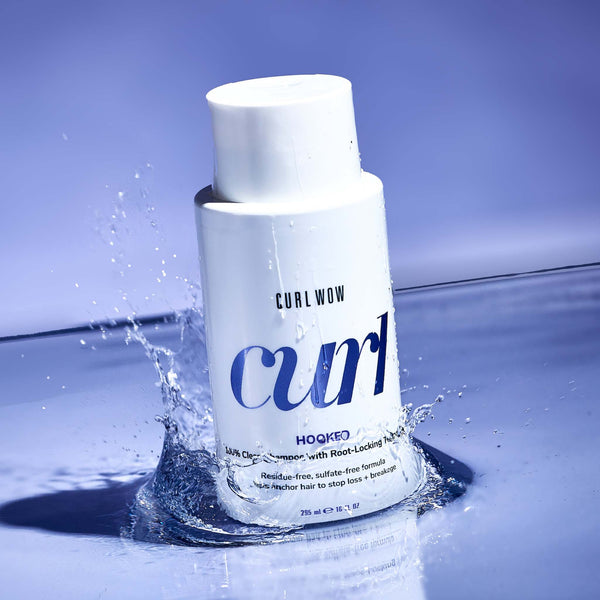
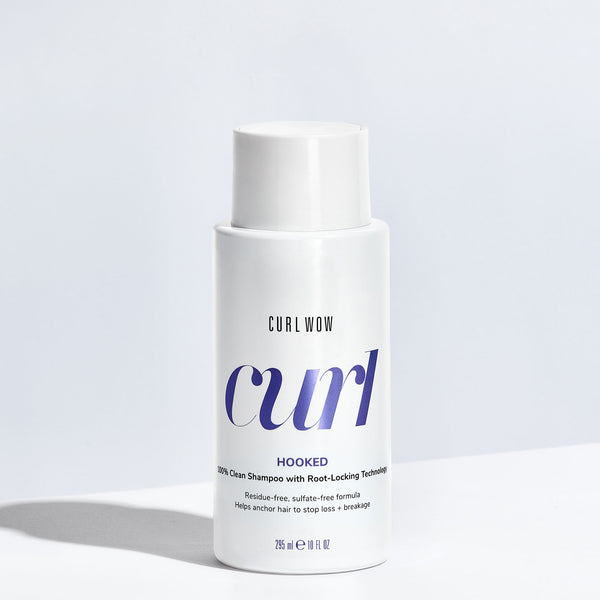
Look for shampoos that clean without leaving residues or harsh surfactants. Curl Wow Hooked Clean Shampoo is a great choice—it’s sulfate-free, residue-free, and designed for curly textures.
It helps “anchor” hair at the root, reducing shedding and keeping curls feeling strong and clean without dryness.

Wash Frequency and Techniques
2. Conditioning Your Curls

Conditioner is where curls start to come alive. This step replenishes hydration and helps seal it in. But not all conditioners are equal—and application matters.
Curl-Optimized Rinse-Out Conditioners
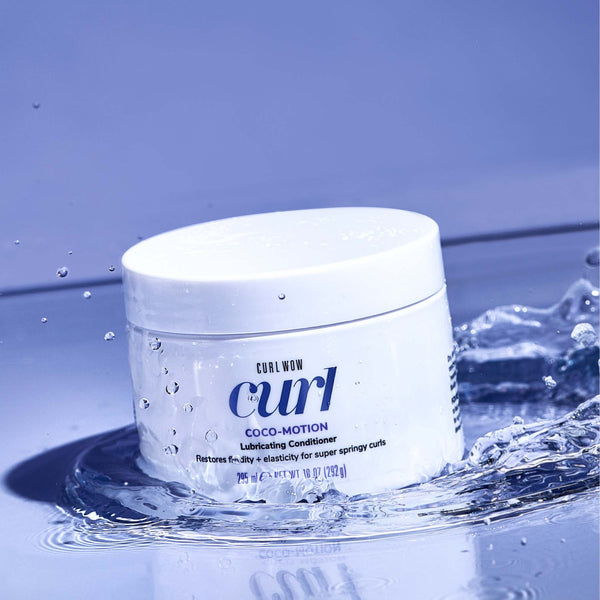
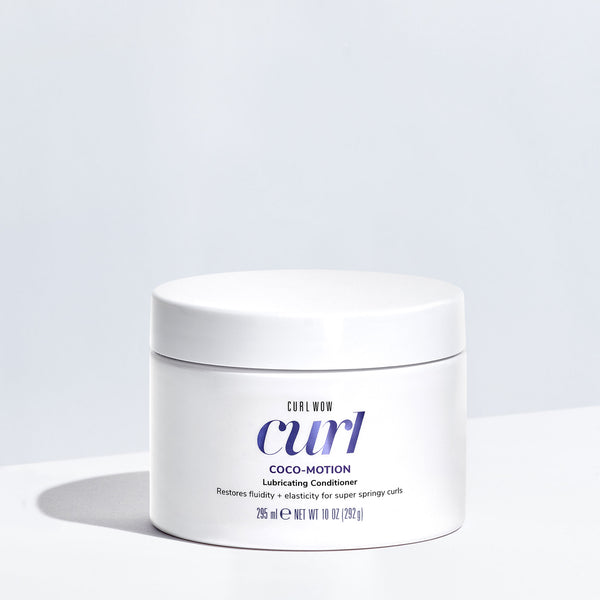
Daily conditioners can sometimes be too light—or too heavy—for curls. Enter Coco-Motion, a rich yet curl-safe rinse-out conditioner that delivers deep hydration without buildup.
Ideal for wavy, curly, or coily hair, it helps:
Use it post-shampoo to hydrate and prep curls for styling, especially if your hair needs more than a leave-in but not quite a full mask.

Deep Conditioning Treatments
Curls benefit from a deep conditioning mask at least once a week. These masks are richer than daily conditioners and contain both humectants (to draw water in) and emollients (to seal it in).
For salon-worthy results at home, use Color Wow Money Masque. It drenches curls with hydration, restores suppleness, and smooths the cuticle so moisture lasts.
Leave-In Conditioners and Their Benefits
Leave-ins, like Color Wow Money Mist, are the secret weapon for curly hair. They:
Unlike rinse-out conditioners, leave-ins keep curls flexible long after wash day. Apply to damp hair, working through mid-lengths and ends before styling.
3. Sealing in Moisture
Conditioning adds hydration, but unless you lock it in, curls will lose water quickly.
This is where sealing products—oils, serums, and protective styles—come into play.

Apply sparingly to damp hair, focusing on mid-lengths and ends.
Protective Hairstyles for Moisture Retention
Braids, twists, and loose buns help reduce exposure to sun, wind, and friction. Protective styles aren’t just about reducing breakage—they also slow water evaporation from the strand, making your hydration last longer.
4. Styling Tips for Moisture Maintenance
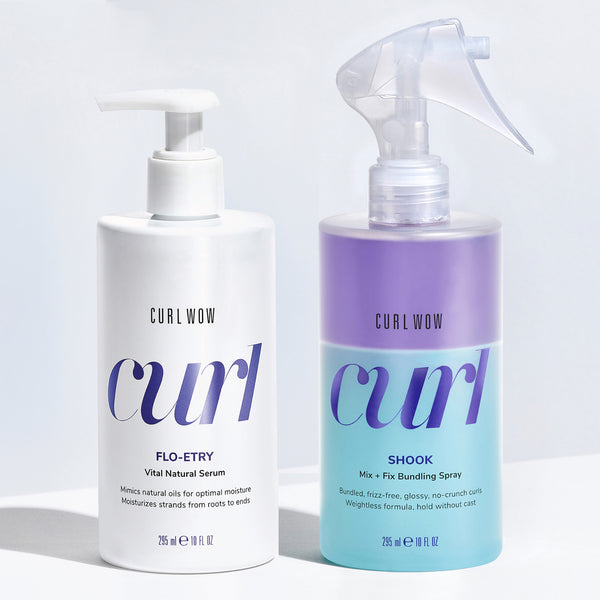
Start with Flo-etry, a deeply hydrating serum that mimics scalp oils and smooths curls from root to tip.
Follow with Shook, a dual-phase, shake-to-activate curl spray that bundles and defines each coil with flexible polymers and rich hydrators—no crunch, no stiffness, just glossy, natural movement.

Avoiding Heat Tools
High heat literally evaporates water from inside the strand, undoing your hydration routine.
Whenever possible:
Conclusion
Curly hair is naturally prone to dryness, but with the right balance of hydration and moisturization, it can thrive.
By choosing sulfate-free shampoos, rich conditioners, weekly masks, sealing oils, and curl-defining stylers, you can keep your curls hydrated, moisturized, and frizz-free.
Pair your topical routine with internal hydration and a nutrient-rich diet, and your curls will be springy, glossy, and full of life.